

Table of Contents
- Why Sustainable Clothing Matters for Minimalist Travelers
- Building a Capsule Wardrobe for Travel
- Best Sustainable Fabrics for Lightweight Travel
- How to Pack Light for Long Trips Without Sacrificing Style
- Best Sustainable Travel Brands and What to Look For
- Sustainable Clothing for Minimalist Travel: The Practical Approach
- Frequently Asked Questions
Last Updated: September 23, 2026
Why Sustainable Clothing Matters for Minimalist Travelers
Sustainable clothing for minimalist travel isn't just about feeling good about your choices, it's about making smarter ones. When you're packing light, every piece needs to earn its place in your bag. Sustainable fabrics tend to be more durable, requiring fewer replacements over years of travel. They also tend to perform better in the conditions you'll actually encounter: wrinkle resistance, moisture management, temperature regulation.

The minimalist traveler is already thinking critically about consumption. You've likely spent years refining what you actually need versus what you think you should bring. That same intentionality applies to fabric choices. A merino wool shirt that lasts five years and handles both heat and cold beats three cheaper alternatives that wear out, pill, or lose shape after a season.
There's also a practical advantage most guides overlook: sustainable fabrics often have better environmental footprints not just in production, but in care. Quick-dry fabrics mean less frequent washing, which matters when you're hand-washing in a hostel sink or paying by the load at a laundromat. Organic cotton and hemp require less water per wear over their lifetime. Tencel uses a closed-loop production process that recovers and recycles solvents. These aren't just marketing claims, they're measurable differences in how your clothes behave on the road.
At Prime Tee Supply, we understand that minimalist travel is about intention. The same principle applies to fabric selection. You're choosing quality over quantity, durability over trends, and pieces that work harder so you don't have to.
Building a Capsule Wardrobe for Travel
A capsule wardrobe for travel is a curated collection of 8-12 pieces that mix, match, and layer across multiple climates and occasions. The goal isn't minimalism for its own sake, it's maximum versatility with minimum bulk. Every item should work with at least three others.
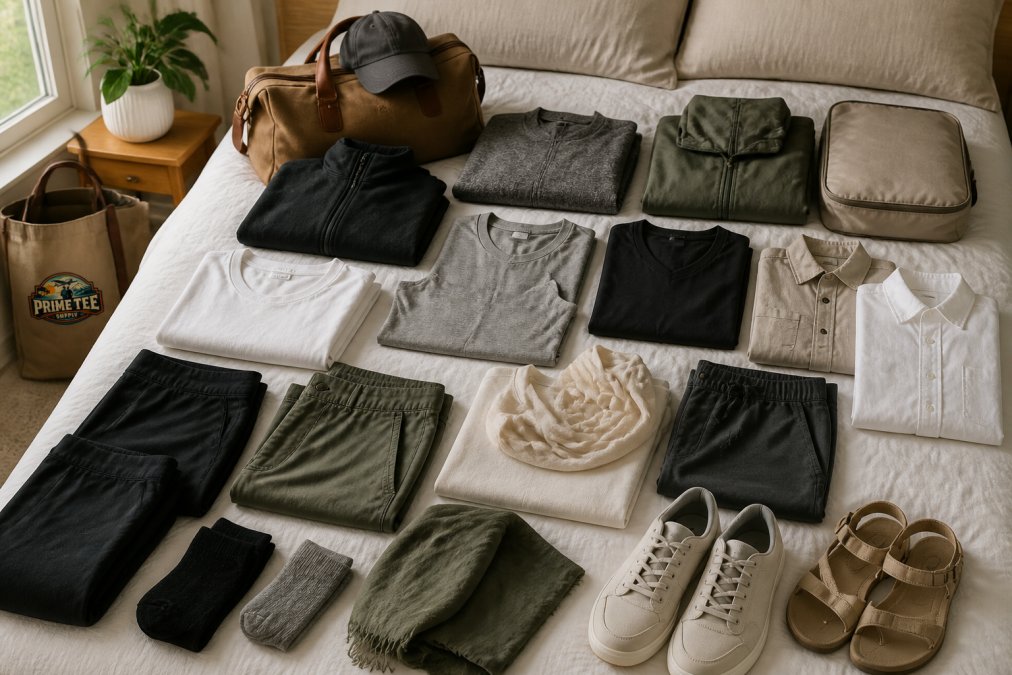
The Core Pieces Every Minimalist Traveler Needs
Start with neutral basics: two lightweight long-sleeve shirts, two short-sleeve tees, one pair of lightweight pants, one pair of shorts, and one light sweater or cardigan. Add one pair of comfortable walking shoes and one dressier option. A lightweight scarf or wrap serves double duty as a layer and a cultural accessory in conservative areas.
Layering for Multiple Climates
Layering is how minimalists adapt to temperature changes without packing heavy coats. A lightweight merino wool base layer, a breathable mid-layer shirt, and a packable outer layer handle everything from cool mornings in the mountains to air-conditioned museums to evening outdoor meals.
Best Sustainable Fabrics for Lightweight Travel
Not all sustainable fabrics perform equally on the road. The best travel fabrics combine environmental responsibility with practical performance: quick-drying, wrinkle-resistant, durable, and breathable.
Natural Fibers That Travel Well
Merino wool is the workhorse of minimalist travel. It's naturally antimicrobial, meaning you can wear it multiple times between washes, a massive advantage when laundry access is limited. It regulates temperature across a wider range than cotton, handles moisture without feeling clammy, and resists odor. Merino is expensive, but the longevity justifies it for travelers.
Wrinkle-Resistant and Quick-Dry Options
Some sustainable fabrics are naturally wrinkle-resistant: merino wool resists creasing, and blends that combine natural fibers with a small percentage of synthetic fibers (often nylon or elastane) gain wrinkle recovery without sacrificing breathability. A 95% merino, 5% nylon blend dries faster than pure merino while maintaining all the performance benefits.
How to Pack Light for Long Trips Without Sacrificing Style
Packing light for extended travel is about strategic repetition, not deprivation. You're wearing the same pieces frequently, which means they need to be pieces you genuinely like. A capsule of basics you tolerate will feel like a uniform by week two. A capsule of pieces you actually enjoy wearing feels like choice.

Best Sustainable Travel Brands and What to Look For
When choosing sustainable travel clothing, look beyond marketing language to actual practices. Third-party certifications matter more than brand claims. Fair trade certification, organic certification, and environmental standards from recognized bodies carry weight that internal claims do not.
Ethical Manufacturing Standards
Ethical manufacturing means fair wages, safe working conditions, reasonable hours, and respect for workers' rights. It's harder to verify than fabric content, but some brands publish detailed supply chain information. Look for brands that name their manufacturers, publish audit reports, or hold certifications from labor rights organizations.
Certifications and Third-Party Verification
Look for these certifications when evaluating sustainable clothing:
- GOTS (Global Organic Textile Standard): Certifies organic fiber content and manufacturing standards for chemicals, water use, and labor practices.
- Fair Trade Certified: Guarantees fair wages and safe working conditions throughout the supply chain.
- B Corp Certification: Indicates the company meets social and environmental performance standards verified by a third party.
- Bluesign: Focuses on chemical safety and environmental responsibility in textile manufacturing.
- Cradle to Cradle: Certifies that products are designed for recycling or composting at end of life.
A single certification doesn't tell the whole story, but multiple certifications from recognized bodies indicate genuine commitment. Brands that hold certifications are usually transparent about displaying them, so look for visible labels or detailed information on their websites.
Sustainable Clothing for Minimalist Travel: The Practical Approach
The real test of sustainable clothing happens in use: on the road, in laundromats, through multiple climates, across weeks of travel. Theory matters less than performance. A fabric that sounds sustainable but falls apart after ten washes serves no one. A fabric that lasts years and performs beautifully is sustainable by definition.
End-of-Life Garment Management
Most discussions of sustainable clothing focus on production and use, but what happens when the shirt finally wears out? A truly sustainable approach considers end-of-life options.
Microplastic Shedding and Travel Laundry
One often-overlooked aspect of sustainable travel clothing is microplastic shedding. Synthetic fibers shed tiny plastic particles when washed, which enter waterways and ecosystems (Microplastics in Wastewater by Washing Polyester Fabrics). This matters especially when you're hand-washing clothes in hostels, guesthouses, and small towns where wastewater treatment may be limited.
Frequently Asked Questions
What's the best way to build a sustainable capsule wardrobe for long-term travel?
Start with five to seven neutral basics in natural or recycled fibers that work across multiple seasons and climates. Choose pieces that layer well and coordinate with each other. Prioritize quality over quantity, garments made from merino wool, organic cotton, hemp, or Tencel last longer and require fewer washes. Add one or two statement pieces like a graphic tee that reflects your travel identity. The key is selecting items that earn their space through versatility and durability rather than filling your bag with single-purpose clothing.
How do I know if a travel brand is actually sustainable or just greenwashing?
Look for third-party certifications like Fair Trade Certified, Global Organic Textile Standard (GOTS), or B Corp certification. Check if the brand publishes information about their manufacturing locations, labor practices, and supply chain transparency. Ethical brands typically disclose where and how their clothing is made and provide details about their environmental impact. Be cautious of vague claims like 'eco-friendly' without supporting evidence. Reputable brands are willing to answer specific questions about their materials, production methods, and certifications.
What fabrics are best for wrinkle-resistant, sustainable travel clothing?
Merino wool naturally resists wrinkles, regulates temperature, and requires minimal washing. Tencel is a sustainable cellulose fiber that resists wrinkles and dries quickly. Organic cotton blended with recycled fibers offers breathability and durability. Hemp is durable and becomes softer with wear. Look for fabrics treated with low-impact finishing processes rather than harsh chemical treatments. These materials balance sustainability with the practical needs of minimalist travel, they pack smaller, need fewer washes, and maintain their appearance throughout extended trips.
Can sustainable travel clothing really handle frequent washing in hostels and budget laundromats?
Yes, when you choose high-quality fabrics and construction. Ring-spun cotton, merino wool, and Tencel are durable enough to withstand regular machine washing. Look for reinforced seams and pre-shrunk fabrics that hold their shape. Minimize washing by using odor-resistant materials like merino wool, which can go longer between washes. When you do wash, use cold water and gentle cycles to extend garment life. Quality construction, not just fabric choice, determines how well clothing handles frequent laundering during extended travel.
What's the weight-to-utility ratio I should consider when choosing sustainable travel pieces?
Prioritize pieces that serve multiple purposes and climates. A lightweight merino wool shirt might weigh slightly more than cotton but offers temperature regulation, odor resistance, and fewer required washes, making it more efficient overall. Calculate utility by asking: how many outfits can I create with this piece? Does it layer well? Will it work in both warm and cool destinations? A 150-gram piece that works across three seasons and five different outfits has better utility than a 100-gram piece that only works in one climate. Sustainable fabrics often deliver better weight-to-utility ratios because they're designed for longevity.
How does microplastic shedding affect sustainable travel laundry practices?
Synthetic fabrics shed microplastics during washing, which accumulates in water systems. Natural fibers like organic cotton, hemp, and merino wool shed negligible microplastics. When traveling, use a microfiber-catching laundry bag or filter if you're washing synthetics. Better yet, prioritize natural and recycled fiber garments that eliminate this problem entirely. If you're traveling long-term and washing frequently in budget facilities, choosing materials that don't shed microplastics reduces your environmental impact and supports local water systems in the places you visit.
What should I do with worn-out travel clothes at the end of a trip?
Plan for end-of-life management before you buy. Choose brands that offer take-back programs or have partnerships with textile recycling facilities. If a garment is still wearable, donate it to local charities or textile exchange programs in your destination. For damaged items, check if the fabric can be composted (natural fibers) or recycled (some programs accept blended materials). Quality sustainable brands often design clothing with durability in mind, meaning fewer items reach end-of-life. When pieces do wear out, responsible disposal through established recycling channels prevents landfill accumulation.