

Table of Contents
- The Three-Layer System: Base, Mid-Layer, and Outer Shell
- Best Fabrics for Travel Clothing: Merino, Synthetic, and Cotton
- Building a Capsule Wardrobe for Travel
- How to Layer for Cold Weather and Transitional Seasons
- Layering for Air Travel Comfort and Transit Days
- How to Pack Light for Italy: A Layering Approach
- Managing Bulk and Weight in Your Luggage
- Layering for Different Activities and Body Types
- Frequently Asked Questions
Last Updated: September 21, 2026
The Three-Layer System: Base, Mid-Layer, and Outer Shell
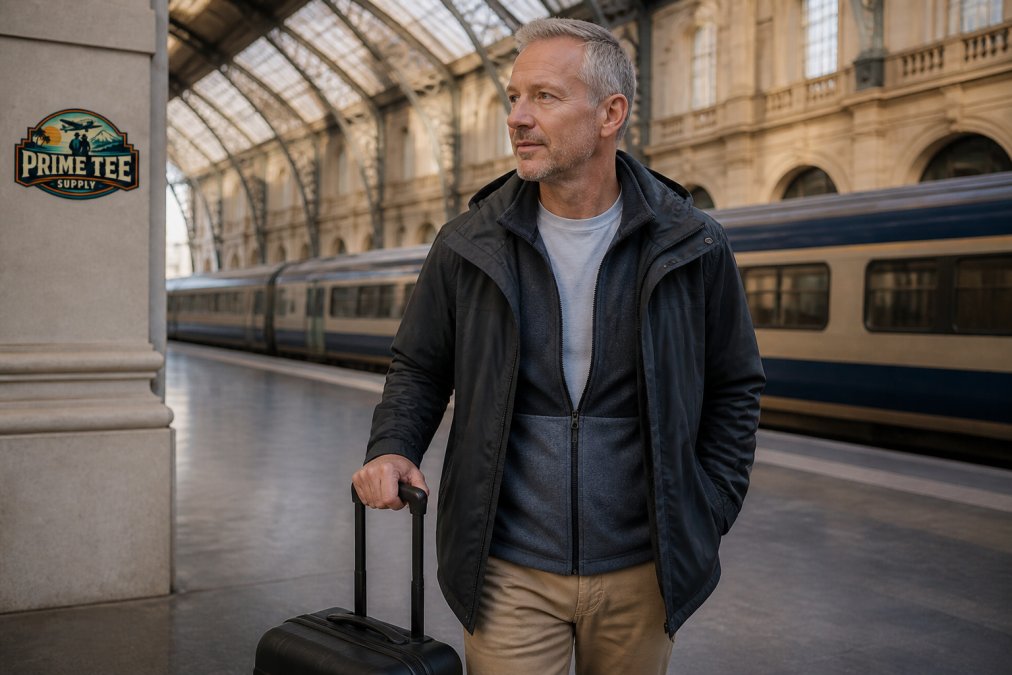
Learning how to layer clothes for travel starts with one system: a base layer, a mid-layer, and an outer shell.
What Each Layer Does
- Base layer: Moves sweat away from your skin. Look for moisture-wicking fabric.
- Mid-layer: Holds in warmth. A sweater, fleece, or light vest works well.
- Outer shell: Keeps out wind and rain. A packable jacket earns its space.
How the Layers Work Together
The magic is adding or removing layers as the day changes: the shell comes off in a warm train car and goes back on in a windy piazza. That is temperature control in seconds, standing up, no changing room required.
Best Fabrics for Travel Clothing: Merino, Synthetic, and Cotton
The best travel fabrics balance moisture-wicking, breathability, and packability. Merino and synthetics lead; cotton suits mild conditions.
Fabric |
Moisture-Wicking |
Breathability |
Packability |
Best For |
|---|---|---|---|---|
Merino wool |
Strong |
Strong |
Good |
Cool to mild days |
Synthetic |
Strong |
Good |
Excellent |
Active days, humidity |
Cotton |
Moderate |
Good |
Good |
Warm, dry days |
Moisture-Wicking and Thermal Regulation
Moisture-wicking fabric pulls sweat off your skin so it can dry, keeping you warm when you stop and cool when you keep going. The payoff is thermal regulation: you stay comfortable and fuss with your clothes less.
Breathability, Packability, and Durability
Breathable fabric lets air move so you do not overheat indoors; packable fabric rolls down small; durable fabric survives repeated washes on the road.
Building a Capsule Wardrobe for Travel
A capsule wardrobe is a small set of pieces that all work together, each pairing with at least two others so a few garments create many outfits. Fewer pieces, more options.
Versatile Pieces That Do Double Duty
- A neutral base layer tee that works alone or under a sweater
- A mid-layer that looks good open or zipped
- An outer shell that folds into its own pocket
- One scarf or pashmina for warmth and style
- Comfortable trousers that dress up or down
The goal is versatility; a piece that works only one way earns its resentment by trip's end.
How to Layer for Cold Weather and Transitional Seasons
Cold weather and transitional seasons ask different things of the same three-layer system: cold wants insulation you can trust, transitional seasons want flexibility. The trick is the same in both: build up, then peel back.
Cold Weather: Insulation You Can Count On
For a genuinely cold trip, a winter train through the Alps, a December week in a northern city, the mid-layer does the heavy lifting. Think in weight, not just type:
- Lightweight mid-layer: a thin merino crew or a light fleece. Good for cool mornings and heated interiors.
- Midweight mid-layer: a thicker fleece, a wool sweater, or a quilted vest. This is the workhorse for cold days.
- Heavyweight mid-layer: a down or synthetic-insulated jacket. Reserve this for real cold, and wear it on travel days so it never enters your bag.
A cold-weather stack, from skin outward:
- A moisture-wicking base layer, long-sleeved if you run cold.
- A midweight mid-layer, fleece, wool, or a light puffer.
- A wind-resistant, water-repellent shell with a hood.
- A scarf, hat, and gloves. These are layers too, and they are the ones you will add and remove most often.
Transitional Seasons: The Day That Changes Its Mind
Spring and fall are where layering earns its reputation: a morning in the 40s, an afternoon in the 60s, and a shaded stone church that feels like neither, all in one day. The answer is lighter pieces, more of them, and a bag to carry them in.
- Start with a short-sleeved or light long-sleeved base layer.
- Add a light mid-layer, a thin sweater, a merino zip-neck, or a packable vest.
- Keep a compact shell in your day bag rather than on your body.
The Day-Swing Problem
The most common pattern seasoned travelers describe is the morning-to-afternoon swing: you leave the hotel dressed for 45 degrees and walk back at 65, carrying a sweater you no longer want. The fix is to treat your day bag as part of the layering system: one light mid-layer folded inside covers the morning, the shell stays put until wind or rain appears, and your base layer does the rest.
A Note on Fabric Weight
When you shop for cold-weather layers, the number that matters most is fabric weight, usually given in grams per square meter (GSM). A light base layer sits around 150-170 GSM; a midweight mid-layer runs roughly 200-300 GSM; heavy insulation climbs higher. No need to memorize, just know two garments of the same type can differ enormously in warmth.
Layering for Air Travel Comfort and Transit Days
Air travel is its own climate: cabins run cool, airports run warm, and you sit still for hours. Layering for transit means dressing for all three.
Practical moves for transit days:
- Wear your bulkiest layer on the plane.
- Choose slip-on shoes and easy layers for security.
- Keep a light scarf handy for cold cabins.
- Skip tight waistbands for long flights.
How to Pack Light for Italy: A Layering Approach
Packing light for Italy comes down to layers, not luck. Italian weather swings from cool northern mornings to warm southern afternoons, sometimes in the same week.
- Two base layer tees in neutral colors
- One mid-layer sweater or fleece
- One packable outer shell
- One scarf for churches, evenings, and wind
- One pair of comfortable walking shoes
Managing Bulk and Weight in Your Luggage
Bulk reduction starts with fabric choice: lightweight layers take less space than heavy ones and give you more options.
A few habits keep your bag manageable:
- Roll soft items instead of folding them flat.
- Wear your heaviest layer on travel days.
- Choose pieces that pack small and dry fast.
- Leave one outfit's worth of space empty for the trip home.
Layering for Different Activities and Body Types
The right layers depend on what you are doing and how you are built: a hike and a museum day need different setups, even on the same trip.
Hiking vs. City Sightseeing
Hiking means movement and sweat, so moisture management matters most. You warm up within fifteen minutes and cool down the moment you stop for a view, that stop-start rhythm shapes hiking layering.
- Base layer: a wicking tee or light long-sleeve.
- Mid-layer: a light fleece or grid-fleece you can shed without removing your pack.
- Outer shell: a breathable, packable shell in your pack, not on your body. You will want it at the summit and not on the climb.
- Extras: a light hat and gloves, even in summer, if you are gaining elevation.
- Base layer: a clean, neutral tee that works on its own.
- Mid-layer: a sweater or cardigan that looks intentional when worn alone.
- Outer shell: a tailored rain jacket or trench that reads as part of the outfit, not as gear.
- Extras: a scarf that doubles as warmth and a nod to local style.
A Third Case: Long Transit and Train Days
Trains, buses, and long station waits sit between the two: mostly still, often in recycled air, moving between a warm carriage and a cold platform. A light base layer, a mid-layer you can remove while seated, and a shell within reach cover the whole day; slip-on shoes and a scarf ease the transitions.
Adapting Layers to Your Build
Body type changes how layers fit and feel. The goal is warmth without bulk, and the fix is usually proportion, not size.
Frequently Asked Questions
What is the 3-3-3 rule for travel packing?
The 3-3-3 rule means packing three tops, three bottoms, and three pairs of shoes. This creates nine outfit combinations from just nine items. For layering, choose tops that work as base or mid-layers, like a soft tee and a light sweater. Add a structured jacket as your outer shell. The rule keeps your bag light while giving you enough variety for a week-long trip.
Can I wear multiple layers of clothes through TSA?
Yes, you can wear multiple layers through TSA. However, you may need to remove jackets, coats, and bulky outer layers during screening. To make security faster, wear your lightest layers, such as a tee and a thin cardigan, and pack heavier outer shells in your carry-on. Slip-on shoes and a belt-free outfit also speed things up.
How do you layer clothes without looking bulky?
Choose thin, close-fitting base layers and mid-layers made from lightweight fabrics like merino wool or synthetic blends. Avoid thick, loose items that add volume. A structured jacket as your outer shell creates a clean silhouette. Also, stick to two or three layers instead of four or five. The goal is warmth through fabric quality, not thickness.
What are the best fabrics for travel layering?
Merino wool, synthetic blends, and high-quality cotton are the best fabrics for travel layering. Merino regulates temperature and resists odors. Synthetics wick moisture and dry quickly. Cotton is soft and breathable for base layers in mild climates. For cold weather, combine a moisture-wicking base with an insulating mid-layer and a wind-resistant outer shell.
Layering well is the difference between a comfortable trip and a bag you fight with for two weeks. At Prime Tee Supply, we make travel tees for people who have already figured that out, with soft ring-spun cotton, a relaxed unisex fit, and designs built around real travel habits. Start with one good base layer and build from there. Shop travel tees and pack lighter for your next trip.