

Table of Contents
- Why Simplified Wardrobe Choices Matter for Travel
- How to Choose Versatile Pieces for Travel
- Travel Outfit Planning: Building Combinations That Work
- Comfortable Travel Clothes That Transition All Day
- Clothes for a Weeklong Trip: Building Your Foundation
- Outfits for Sightseeing and Dinner: Dressing for Every Moment
- Adapting Your Wardrobe to Destination and Season
- Frequently Asked Questions
Last Updated: October 17, 2026
Why Simplified Wardrobe Choices Matter for Travel
When you're planning a trip, the temptation is real: bring everything. But somewhere around the second day, you realize you're carrying weight you don't need and wearing the same three outfits anyway.
This problem can be solved by focusing on pieces that work together, transition across different moments in your day, and feel comfortable whether you're exploring a village market or settling into a café. The real benefit isn't about bringing fewer clothes, it's about bringing clothes that actually work.
At Prime Tee Supply, we understand how seasoned travelers think about their wardrobes. You want pieces that reflect who you are, work across multiple occasions, and feel like you on day one or day ten.
The foundation is choosing pieces intentionally. When every item works with most other items, you spend less time deciding what to wear and more time living your trip.
How to Choose Versatile Pieces for Travel
The starting point for versatile pieces is understanding what "versatile" actually means. A versatile piece isn't just something that goes with everything. It's something that moves with you, from morning coffee to afternoon walking to evening dining, without requiring you to change.
Focus on Core Items and Neutral Colors
Think about the colors you already wear at home, warm neutrals, cool grays, blacks, whites, or earth tones. Your travel wardrobe should reflect that same palette.
Neutrals combine easily: a cream shirt works with navy, black, gray, olive, or rust, and a gray sweater does the same. Choosing neutrals as your base multiplies your combinations rather than limiting them.
Core items form the backbone of your travel wardrobe. These are the pieces you'll wear repeatedly:
- A fitted neutral top that layers well
- A slightly looser neutral top for comfort
- Two pairs of bottoms in neutral tones
- One lightweight layer for temperature changes
- One pair of comfortable shoes for walking
- One pair of shoes that works for casual dining
These core pieces should feel like extensions of how you already dress. If you never wear navy at home, don't start on a trip. If you love texture and pattern, build those into your travel wardrobe too, just keep them within your natural color range.
Prioritize Fabrics That Work Across Climates
Fabric matters more than most travelers realize. Some fabrics wrinkle easily, demand hand washing, or feel uncomfortable in humidity; others move with you across temperature changes and improve with wear.
Natural fibers like cotton breathe well in warm weather and age gracefully, they look better after a few days of wear, not worse. Blends that include natural fibers offer durability without stiffness.
Weight matters too. Lightweight fabric offers more structure and hides wrinkles better. The ideal travel fabric looks intentional but stays easy to carry.
Consider how a fabric behaves after several hours of wear: does it stay comfortable, resist noticeable wrinkles, and hold up for another day? The best travel fabrics answer yes to all three.
Travel Outfit Planning: Building Combinations That Work
Once you've chosen your core pieces, the real work begins: making sure they actually combine into outfits you'll want to wear.
The Mix-and-Match Approach
The mix-and-match principle is simple: every top should work with every bottom, every layer over multiple outfits, and every shoe with multiple combinations.
This doesn't mean everything matches perfectly, it means that when you pull items at random, they look intentional together.
Lay out your pieces and actually combine them. Three tops and two bottoms should yield at least six outfits; if not, one piece isn't working hard enough, swap it for something more versatile.
Add a layer or two and your combinations multiply: a lightweight cardigan over a simple top, or a scarf or wrap, transforms how your core items look without taking up much space.
Accessories amplify your options: a simple necklace or earrings shifts an outfit from casual to intentional, a belt redefines the silhouette, and shoes create the biggest change of all.
Planning for Layering and Transitions
Travel means moving between temperatures and settings all day, a cool morning, a warm afternoon, a chilly café. Layering handles all of it without multiple complete outfits.
Choose layers that work over your core pieces, a lightweight cardigan, a structured shirt, or a simple sweater, neutral enough to work with everything.
Your layers should bridge the day's transitions, casual coffee, practical afternoon exploring, slightly more polished dining, without a complete change.
The best layers are pieces you can tie around your waist or drape over your arm when you warm up.
Comfortable Travel Clothes That Transition All Day
The clothes you wear on a travel day need to work for hours without making you uncomfortable.
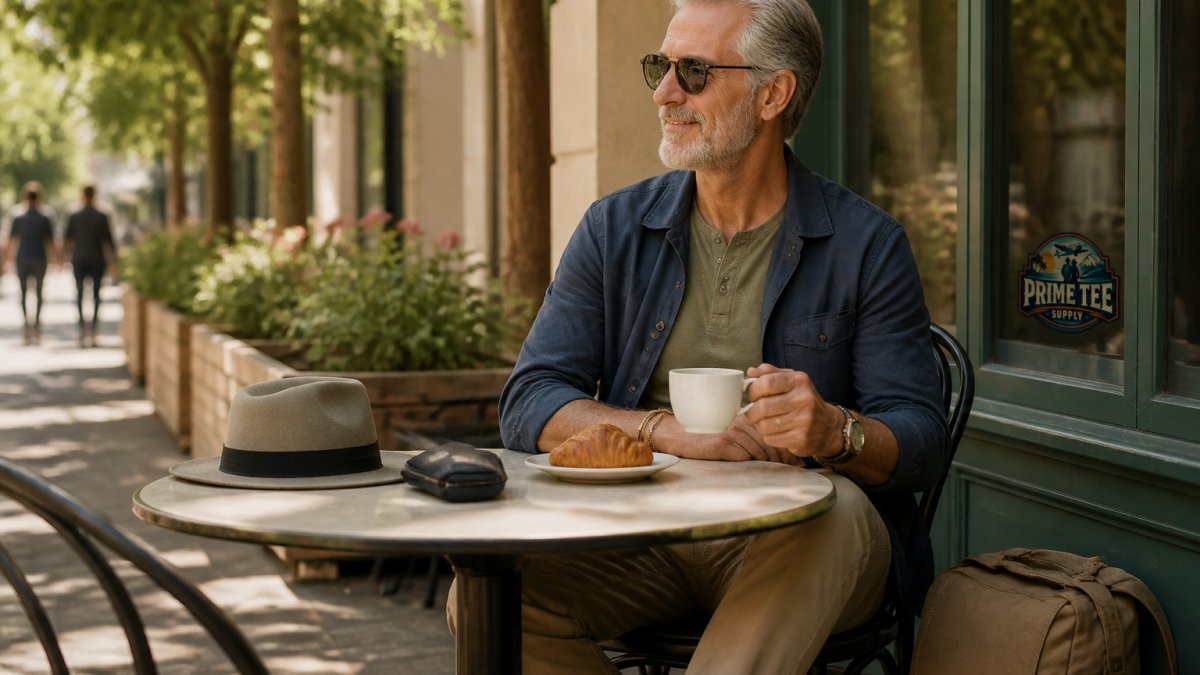
Comfort starts with fit. Too tight restricts movement and exhausts you after hours; too loose looks sloppy. The sweet spot allows movement, doesn't cling, and feels made for you.
The best travel clothes move with you, need no constant adjusting, and feel as comfortable in a café as walking through a market.
Fabric weight matters too: lightweight fabrics suit extended wear in warm climates, medium-weight fabrics offer structure, and the ideal breathes while holding its shape.
Consider how a piece feels against your skin. The most comfortable travel clothes are ones you'd reach for at home, an extension of how you naturally dress.
Clothes for a Weeklong Trip: Building Your Foundation
A week is long enough to need some variety but short enough that you don't need an enormous wardrobe. The key is choosing pieces that work together and feel comfortable for repeated wear.
Tops and Bottoms That Rewear Well
For a weeklong trip, plan on wearing most pieces multiple times. A top that feels fresh after one wear and comfortable after two beats one that needs washing every time.
Natural fibers tend to rewear better: they breathe, don't hold odors, and develop character with wear rather than looking worse.
Consider bringing:
- Two or three tops in neutral colors that layer well
- One top with slightly more personality that still works with everything
- Two pairs of bottoms in neutral tones
- One pair of bottoms in a different style (if you bring pants, also bring something that's not pants)
This gives you multiple outfit options with a manageable number of pieces, each top working with each bottom and with your layers.
Choose pieces you'd actually wear at home; if a style or fit is uncomfortable there, it won't feel better while traveling.
Shoes and Accessories That Anchor Your Outfits
Shoes are the foundation of how an outfit feels. For a week of travel, you typically need two or three pairs: one for serious walking, one for casual moments, and optionally one for more formal dining.
Walking shoes should be broken in and genuinely comfortable, shoes you've already worn multiple times at home will serve you far better than anything new.
A second pair shifts the tone of your outfits, sandals, slip-ons, or simple flats if your walking shoes are practical, giving variety without extra pairs for every activity.
Accessories do enormous work in a simplified wardrobe: a scarf, necklace, belt, or earrings transforms your core pieces and multiplies your options. Choose metals and styles you already wear so they work with multiple outfits.
A small bag that works for both day exploration and evening keeps you from needing multiple, look for something neutral that's comfortable to carry for hours.
Outfits for Sightseeing and Dinner: Dressing for Every Moment
Travel involves different activities and settings, and your clothes should handle the transitions without separate outfits for each moment.
The trick is layering and combining for different occasions: the same top and bottoms look casual with walking shoes, then feel intentional for dinner with a different layer, shoes, and a simple accessory.
For sightseeing, prioritize comfort and practicality, walking, stairs, markets, museums. Clothes should allow movement, feel comfortable for hours, and work with shoes you can walk in all day.
For dining, aim for intentional without formal: the same sightseeing outfit with different shoes and a layer, or a different top with the same bottoms. The goal is looking like you made an effort without feeling overdressed.
The beauty of a simplified wardrobe is achieving both with the same core pieces, the transition happens through layering, shoes, and accessories.
Adapting Your Wardrobe to Destination and Season
Different destinations and seasons call for different approaches, a cool mountain village versus a warm coast.
For warm destinations, focus on lightweight, breathable natural fibers like linen and cotton.
For mixed temperatures, cool mornings, warm afternoons, layering pieces are essential, letting the same outfit work as you add or remove layers.
Consider what you'll actually do: museums and cafés call for different clothes than hiking or outdoor exploring. Your simplified wardrobe should reflect how you'll spend your time.
Consider local dress codes and customs too. Core neutral pieces typically work anywhere, but understanding local expectations helps you feel comfortable and respectful.
Travel is an important part of who you are. The clothes you bring should reflect that, pieces that feel like extensions of yourself, not generic travel gear.
At Prime Tee Supply, we create travel tees designed for this exact purpose. Made from soft, breathable, ring-spun cotton, they layer well, reward repeated wear, and feel comfortable whether you're exploring a quiet village or settling into your favorite café. The Carry-On Only T-Shirt celebrates the traveler who has refined their approach, while the Light Packers T-Shirt speaks to anyone who values intentional choices. Start building your travel wardrobe with pieces that actually work together. SHOP TRAVEL TEES

Frequently Asked Questions
How do I plan outfits for a weeklong trip?
Start by choosing 4-5 core bottoms and 5-7 tops in neutral colors that coordinate with each other. Select pieces that can be layered and reworn in different combinations. Add 2-3 pairs of shoes that work for both daytime activities and evening outings. This approach lets you create multiple outfit combinations from fewer items while keeping your wardrobe flexible for different activities and weather.
What makes comfortable travel clothes different from everyday wear?
Comfortable travel clothes prioritize breathability, freedom of movement, and versatility. They work across multiple settings, from sightseeing to casual dining, without needing frequent changes. Look for fabrics that feel soft against the skin, pieces that don't wrinkle easily, and designs that layer well. Quality matters because well-made garments hold up to frequent wearing and washing, which is essential when you're traveling and rewearing items throughout your trip.
How should I choose outfits for sightseeing and dinner?
Select pieces that can serve double duty. A classic pair of linen pants or neutral bottoms works for daytime exploration and evening meals. Pair them with a simple top during the day, then add a structured layer or accessory in the evening to elevate the look. Choose walking shoes that are polished enough for casual dining, or pack one dressier pair if you plan formal meals. This strategy means you can transition from one activity to the next without needing a complete outfit change.
What's the best approach to choosing versatile pieces?
Build around neutral colors, black, white, grey, navy, and earth tones, that coordinate naturally. Prioritize basic pieces like classic T-shirts, simple tops, and well-fitting bottoms that pair with multiple items. Choose fabrics that breathe in warm climates and layer comfortably in cooler ones. Look for quality construction with reinforced seams and durable stitching, especially in pieces you'll wear frequently. Graphic tees that reflect your travel interests can add personality while remaining versatile enough to pair with different bottoms and layers.