

Table of Contents
- Why Quality Matters for Travel Clothing
- Understanding Fabric Composition and Weight
- Garment Construction Quality Checklist
- Durable Travel Fabrics Guide
- Sustainable Clothing for Minimalist Travel
- Stress Testing: What to Look for in Wear Patterns
- Repairability and Circularity
- Your Quality Travel Apparel Checklist
- Frequently Asked Questions
Last Updated: September 27, 2026
Why Quality Matters for Travel Clothing
When you're traveling for weeks or months, your clothes become more than just fabric. They're your constant companions through train stations, cobblestone streets, hostel laundries, and unexpected weather. Quality travel apparel holds up through repeated wear and washing in ways that most everyday clothing simply doesn't.
The difference between quality travel apparel and ordinary clothing often comes down to construction details most shoppers never examine. A seam that unravels after five washes, a button that falls off mid-trip, or fabric that pills after a few days of wear can derail your carefully planned minimalist packing strategy. This guide will teach you exactly what to look for when evaluating quality travel apparel so you can build a wardrobe that actually lasts.
Understanding Fabric Composition and Weight
The foundation of quality travel apparel starts with the fabric itself. Not all cotton is created equal, and understanding the difference between fiber types and fabric weight helps you predict how a garment will perform.
Natural vs. Synthetic Fibers for Travel
Natural fibers like cotton and merino wool breathe well and feel comfortable against skin. Cotton is affordable and versatile. Merino wool regulates temperature and resists odor naturally, making it excellent for extended trips where laundry access is limited.
Synthetic blends offer different advantages. Polyester and nylon dry faster than natural fibers and tend to resist wrinkles better. Many quality travel apparel options use synthetic blends specifically because they balance breathability with durability and quick-dry properties.
The best choice depends on your destination and travel style. A minimalist packer heading to warm climates might prioritize moisture-wicking synthetics. Someone traveling between seasons might prefer the thermal regulation of merino wool blended with synthetic fibers for durability.
Denier and Fabric Weight as Durability Indicators
Denier measures fiber thickness. Higher denier fabrics are more durable and resistant to abrasion. A 100-denier fabric will outlast a 50-denier fabric of the same fiber type when subjected to repeated wear and washing.
Fabric weight tells you how heavy the material is per square meter. Lightweight travel apparel typically ranges from 4 to 6 ounces. This weight range balances packability with durability. Too light and the fabric becomes fragile. Too heavy and it takes up valuable luggage space.
Look for garments labeled with their weight. Ring-spun cotton at 4.5 ounces, for example, offers the softness of quality cotton without excessive bulk. This weight is ideal for travel because it packs efficiently while maintaining structural integrity through repeated washing.

Garment Construction Quality Checklist
How a garment is assembled matters as much as the fabric itself. The best material in the world falls apart if the seams fail or the hardware gives way.
Evaluating Seam Construction
Examine the seams closely. Run your finger along them to check for evenness and tightness. Quality seams should feel smooth with consistent spacing between stitches.
Look for these construction details:
- Double-stitched seams at stress points like shoulders and armholes. These seams have two parallel rows of stitching and are significantly more durable than single-stitched seams.
- French seams or flat-felled seams that enclose the raw fabric edges. These prevent fraying and look professional from both sides.
- Stitch density that's consistent throughout. Loose stitching creates weak points where the seam can fail.
- Reinforced stress points where sleeves meet the body and where side seams begin.
Count the stitches per inch if you can. Quality travel apparel typically has 12-16 stitches per inch. Fewer stitches mean the seam is more likely to split under stress.
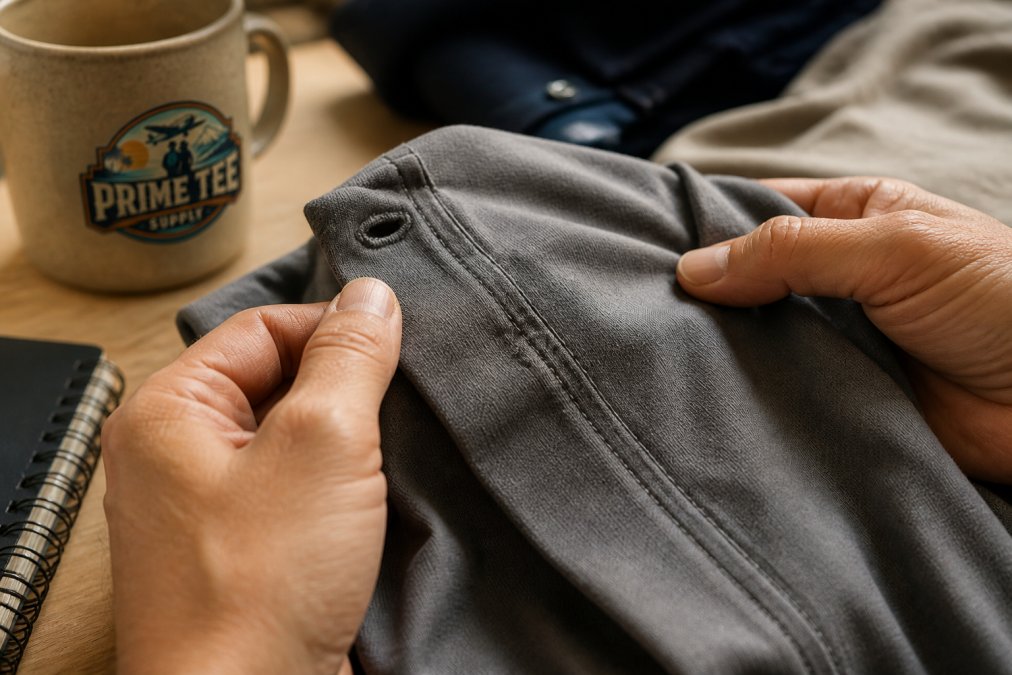
Checking Buttonholes, Hems, and Hardware
Buttonholes are often where garments fail first. Quality buttonholes have reinforced edges that prevent tearing. Run a button through the hole several times. It should feel smooth, not rough or loose.
Inspect buttons themselves. They should be attached with thread wound through the shank (the space between button and fabric) rather than sewn flat against the fabric. This allows the button to move slightly and reduces stress on the thread.
Hems deserve attention too. A quality hem is:
- Sewn with consistent stitch length and spacing
- Reinforced at corners where stress concentrates
- Finished on the inside so raw edges don't show
- Secure enough that you can't easily pull threads loose
Check zippers by running them smoothly from top to bottom several times. They should glide without catching. The slider should feel substantial, not flimsy.
Durable Travel Fabrics Guide
Certain fabric properties directly impact how well clothing survives travel conditions.
Moisture-Wicking and Breathability
Moisture-wicking fabrics pull sweat away from your skin and allow it to evaporate quickly. This keeps you comfortable during active days and helps clothes dry faster after washing. Synthetic fibers naturally wick moisture better than untreated cotton.
Breathability refers to how air flows through the fabric. A breathable fabric allows your skin to stay dry and cool. Dense, tightly woven fabrics may be durable but can feel hot and clammy in warm climates.
Quality travel apparel balances both properties. You want fabric that wicks moisture away but still allows air circulation.
Wrinkle Resistance and Recovery
Wrinkle-resistant fabrics bounce back to their original shape after packing and wearing. This matters for minimalist travelers who can't carry multiple changes of clothes.
Odor Control and Antimicrobial Treatments
Travel means wearing clothes longer between washes than you might at home. Fabrics that resist odor become essential.
Sustainable Clothing for Minimalist Travel
Minimalist travel and sustainable clothing align naturally. Buying fewer, higher-quality items that last longer reduces waste and luggage weight.
Identifying Greenwashing vs. Real Certification
Many brands use environmental language without backing it up. Greenwashing uses terms like "eco-friendly" or "sustainable" without third-party verification. Real sustainability comes from measurable certifications.
Look for these legitimate certifications:
- GOTS (Global Organic Textile Standard) certifies organic cotton from seed to finished product
- Fair Trade Certified ensures workers are paid fairly and work in safe conditions
- Bluesign® certifies that chemicals used in production don't harm the environment or workers
- OEKO-TEX Standard 100 verifies that textiles are free from harmful substances
Longevity as Sustainability
The most sustainable garment is one you wear for years. A high-quality shirt that lasts five years and gets worn 200 times is far more sustainable than a cheap shirt worn 10 times before falling apart.
Stress Testing: What to Look for in Wear Patterns
Examine how a fabric shows wear. This reveals whether it will hold up to your travel demands.
Repairability and Circularity
Quality travel apparel should be repairable. A torn seam shouldn't mean discarding the shirt. A missing button shouldn't be permanent.
Your Quality Travel Apparel Checklist
Use this checklist when evaluating travel clothing:
| Quality Indicator | What to Check | Why It Matters |
|---|---|---|
| Fabric composition | Natural, synthetic, or blend | Determines breathability, durability, and care requirements |
| Fabric weight | 4-6 oz for travel | Balances packability with durability |
| Seam construction | Double-stitched at stress points | Prevents seams from splitting under wear |
| Stitch density | 12-16 stitches per inch | Tighter stitching means stronger seams |
| Buttonholes | Reinforced edges, smooth feel | Prevents tearing and button loss |
| Wrinkle recovery | Returns to shape within seconds | Essential for minimalist packing |
| Moisture-wicking | Pulls sweat away from skin | Keeps you comfortable and clothes dry |
| Odor resistance | Antimicrobial treatment or natural fiber | Extends time between washes |
| Color fastness | Consistent color after washing | Prevents fading that makes clothes look worn |
| Hem quality | Consistent stitching, reinforced corners | Prevents unraveling and fraying |
When shopping for quality travel apparel, examine each item against this checklist. You don't need perfection in every category, but consistent quality across most indicators predicts how well a garment will serve you.
Frequently Asked Questions
What makes a fabric durable enough for frequent travel and washing?
Durable travel fabrics combine tight stitch density, quality fiber composition, and proper fabric weight. Look for natural fibers like ring-spun cotton or merino wool blends that maintain tensile strength through repeated washing. Synthetic blends add abrasion resistance and wrinkle recovery. A 4.5 oz fabric weight (like that found in quality travel t-shirts) strikes the balance between breathability and durability, heavy enough to resist pilling and thinning, light enough to pack efficiently and dry quickly.
How do I know if garment construction will actually hold up to months of travel?
Inspect three key areas: seams (look for double-stitched or french seams with tight stitch density), buttonholes (reinforced stitching around edges), and hems (finished, not raw). Check that thread color matches the fabric and stitching is even with no loose threads. Press gently on seams to see if they pucker or gap. Quality construction means thread won't unravel after a few washes, and seams stay flat through repeated packing and wearing.
What's the difference between sustainable clothing for minimalist travel and regular travel clothes?
Sustainable travel apparel prioritizes longevity and minimal environmental impact. Look for certifications like GOTS (Global Organic Textile Standard) or OEKO-TEX for verified eco-friendly production. True sustainable pieces are designed to last years, not seasons, which means fewer replacements and less waste. They often use natural fibers, ethical manufacturing, and minimal chemical treatments. For minimalist packers, this means building a capsule wardrobe of versatile, durable pieces that layer well and work across multiple climates.
How can I spot counterfeit or greenwashing in travel apparel brands?
Greenwashing uses vague terms like 'eco-friendly' or 'natural' without third-party verification. Real certifications include GOTS, Fair Trade, or OEKO-TEX labels. Check brand websites for specific material sourcing, manufacturing location, and transparent supply chain information. Counterfeit items often have misspelled tags, inconsistent stitching, or misaligned graphics. Authentic brands provide detailed fabric composition, care instructions, and verifiable production details. If a brand won't explain where and how their clothes are made, that's a red flag.