

Table of Contents
- What Makes Travel Apparel for Older Adults Different
- Build a Capsule Wardrobe for Travel That Actually Works
- Wrinkle-Free Travel Outfits for Women Over 60
- Comfortable Travel Clothes for Seniors: Mobility, Fit, and Footwear
- Fabric Guide: Breathable, Moisture-Wicking, and Easy-Care Materials
- Climate-Specific Packing Strategies for Older Travelers
- Budget vs. Investment Travel Apparel: What's Worth Paying For
- Frequently Asked Questions
Last Updated: September 19, 2026
What Makes Travel Apparel for Older Adults Different
The best travel apparel for older adults solves problems that standard travel clothing ignores: easy on-and-off closures, waistbands that don't dig during long train rides, and fabrics that stay comfortable through temperature swings. This guide breaks down what actually matters when you pack.
Build a Capsule Wardrobe for Travel That Actually Works
A capsule wardrobe for travel is a small set of coordinated pieces that mix and match to create multiple outfits from minimal luggage. For older travelers, the goal is 10-14 pieces that cover a two-week trip.
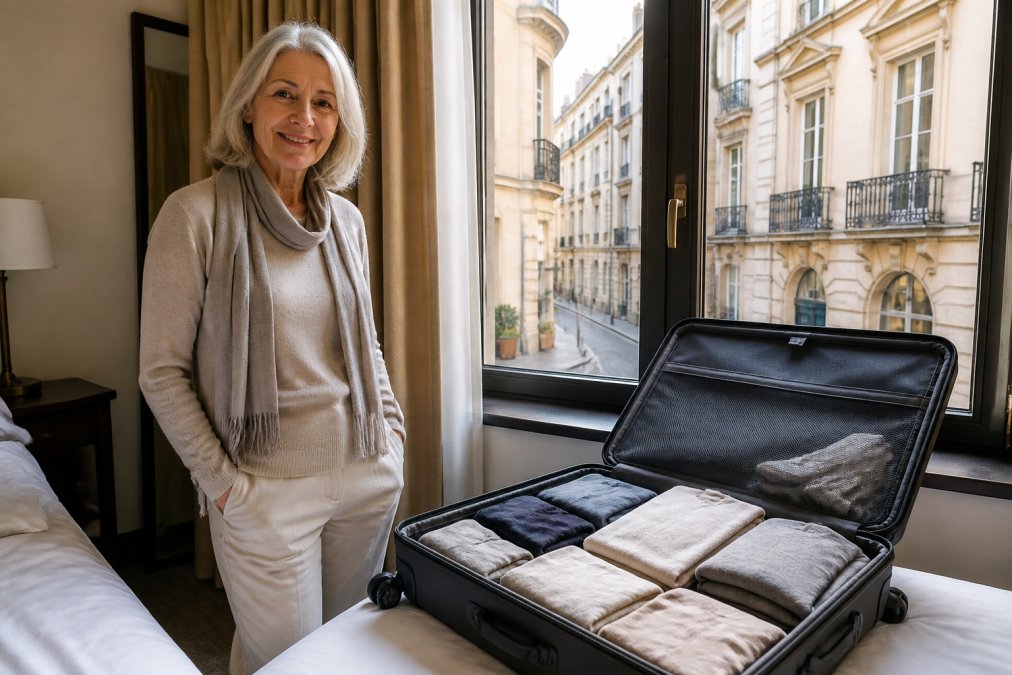
Start with these essentials:
- 3-4 wrinkle-free tops in your base colors
- 2 pairs of comfortable pants (one casual, one slightly dressier)
- 1 lightweight layer for cool evenings
- 1 pair of broken-in walking shoes
- 1 packable jacket
Coordinated Separates and a Simple Color Palette
Sticking to a tight color palette means every top works with every bottom. You pack fewer pieces and still have more outfit options.
Wrinkle-Free Travel Outfits for Women Over 60
Knit fabrics drape well and rarely show wrinkles. A simple knit top in a solid color pairs with everything and looks polished straight out of the suitcase.
Comfortable Travel Clothes for Seniors: Mobility, Fit, and Footwear
Comfortable travel clothes for seniors prioritize three things: stretch fabric that moves with you, closures you can manage without a fight, and footwear that supports long days on cobblestones and airport concourses. Most guides stop at "wear stretchy pants." That advice is fine as far as it goes, but it skips the design details that actually determine whether you can dress yourself comfortably in a narrow airplane lavatory or a hotel room with poor lighting.
Adaptive Design Features Most Guides Skip
Adaptive clothing, apparel engineered for people with arthritis, limited dexterity, or reduced range of motion, has moved well beyond medical-looking garments. The features worth seeking out on travel pieces include:
- Magnetic closures on shirt plackets, jacket fronts, and pant flies. They look like standard buttons but snap together with one hand and no fine motor precision.
- Easy-pull zippers with oversized pulls, looped tabs, or ring pulls that you can grab without pinching.
- Side-zip or rear-zip footwear that opens wide so you step in rather than forcing your foot through a narrow collar.
- Seated dressing construction, higher back rises, longer front openings, and stretch panels that let you put on pants while sitting on the edge of a bed.
- Flat, wide waistbands with no interior tags, no metal hardware against the skin, and no digging when you sit for hours.
- Pull-on styles that eliminate bending to fasten anything below the waist.
Footwear: The Single Most Important Purchase
Walking comfort depends on arch support, a wide toe box, a heel counter that holds the foot steady, and an outsole that grips wet stone and smooth terminal floors. For older travelers, three additional factors matter:
- Cushioning that doesn't collapse. Foam midsoles lose rebound over time. A shoe that felt plush on day one can feel flat by day ten of a long trip.
- Removable insoles. If you wear orthotics or a custom insert, confirm the insole lifts out and the shoe has enough depth to accommodate a replacement.
- Secure but adjustable closure. Laces you can swap for elastic no-tie laces, or hook-and-loop straps, reduce bending and keep the fit consistent when feet swell on travel days.
Feature |
Why It Matters |
What to Look For |
|---|---|---|
Stretch waistband |
Comfort during long sitting |
Elastic, drawstring, or flat knit band |
Pull-on or magnetic closure |
Easy dressing with limited dexterity |
No buttons, no fine-motor zippers |
Moisture-wicking fabric |
Temperature regulation |
Synthetic blends or merino |
Wide toe box |
Walking comfort |
Room for toe spread, no pinch at the pinky |
Grippy sole |
Safety on wet or polished surfaces |
Rubber tread with defined lugs |
Removable insole |
Orthotic compatibility |
Lifts out cleanly, shoe has depth |
Fit Adjustments for Changing Bodies
Feet widen and arches flatten with age, and ankles and calves can swell on long flights. Buy walking shoes at the end of the day, when feet are at their largest, and size to the larger foot. For pants, look for waistbands with an inch or two of hidden stretch or an internal drawstring so the same pair fits comfortably before and after a flight.
Fabric Guide: Breathable, Moisture-Wicking, and Easy-Care Materials
Breathable fabrics let air circulate and moisture escape, which keeps you comfortable in humidity and on warm trains. Moisture-wicking materials pull sweat away from your skin instead of letting it soak in.
Quick-Dry, Odor-Resistant, and Stain-Resistant Options
Quick-dry fabrics are essential if you plan to wash clothes in a hotel sink. Most dry overnight, which cuts your packing list in half.
Climate-Specific Packing Strategies for Older Travelers
Climate-specific packing means matching your clothing to the temperatures and conditions you'll actually face, not the regional average. This matters more after 60 because thermoregulation changes: circulation to the skin and extremities declines, sweat gland output drops, and the body's ability to shed heat during exertion or retain it at rest becomes less efficient. The practical result is that older travelers often feel colder at rest and hotter while moving than younger companions on the same trip.
A Layering System Built for Temperature Sensitivity
Instead of packing separate wardrobes for each climate, build one three-layer system and vary the pieces:
- Base layer: merino wool or a synthetic blend that wicks moisture. This is the layer that touches skin, so prioritize softness and odor resistance.
- Mid layer: a lightweight fleece, knit sweater, or packable synthetic insulation. This is the layer you add and remove most often.
- Outer layer: a water-resistant, wind-blocking shell with a hood. Wind is the most underrated comfort factor on a trip.
Hot and Humid Destinations
- Light colors reflect heat; loose fits allow airflow.
- A wide-brimmed hat and UV-blocking sunglasses reduce heat load on the head and face.
- Breathable walking shoes with moisture-wicking socks prevent blisters and fungal issues, which become more common with age.
- Carry a light long-sleeve layer anyway. Air conditioning on planes, trains, and in museums can be aggressively cold.
Cool and Variable Climates
- Pack insulation that compresses small so you can carry it in a day bag when temperatures swing.
- A water-resistant shell matters more than a heavy coat. Rain and wind, not deep cold, are the usual problems on shoulder-season trips.
- Gloves, a scarf, and a warm hat take up almost no space and make a disproportionate difference for travelers with reduced circulation.
Trips That Span Multiple Climates
Build the layering system rather than packing two wardrobes. Test the full system at home: wear the base, mid, and shell together indoors for 20 minutes to confirm nothing binds at the shoulders or waist. If a layer restricts movement, it will be the first thing you leave in the hotel room, and the first thing you wish you had.
Medication, Hydration, and Fabric Choices
Some common medications affect how the body handles heat and cold. Diuretics increase fluid loss; beta-blockers can blunt the heart-rate response to heat; some antidepressants affect sweating. This is a conversation to have with a physician before a trip, not a reason to skip one, but it is a reason to pack more thoughtfully than the average traveler.
Practical adjustments:
- Drink more water than thirst suggests, and carry a refillable bottle.
- Choose light-colored, loose fabrics in heat; add a moisture-wicking base layer in cold.
- Avoid 100% cotton next to the skin in humid climates, it holds sweat and dries slowly.
Building This System on a Fixed Income
A full technical layering system can cost several hundred dollars new. A fixed-income approach that works just as well:
- Buy the base layer first. One quality merino or synthetic base layer does more for comfort than any other single piece.
- Use an everyday fleece or sweater you already own as the mid layer.
- Spend on the shell. A packable, water-resistant shell is the piece most likely to be used on every trip, in every season.
- Watch end-of-season sales at outdoor retailers, when last year's colors drop sharply in price.
- Skip travel-specific branding. A well-made everyday piece performs the same function.
Budget vs. Investment Travel Apparel: What's Worth Paying For
Spending more makes sense on pieces you'll wear constantly: walking shoes, a packable jacket, and a versatile layer. Save money on basics like t-shirts and socks.
Investment pieces worth the cost:
- Walking shoes with real arch support
- A packable down or synthetic jacket
- One merino wool layer for temperature regulation
Budget-friendly pieces that work fine:
- Graphic tees and casual tops
- Socks and underwear
- Simple knit layers
Frequently Asked Questions
What are the best travel clothes for a 70-year-old woman?
Look for soft, breathable fabrics like merino wool and synthetic blends that resist wrinkles and dry quickly. Choose stretch fabric for walking comfort and easy-care pieces that survive hotel sinks and laundromats. A capsule wardrobe of coordinated separates in neutral colors keeps packing simple. Mobility-friendly features such as pull-on waistbands, longer hemlines, and lightweight layers make a real difference on long travel days.
What fabrics are best for wrinkle-free travel clothing?
Merino wool, synthetic blends, and stretch fabrics hold up best. Merino wool resists odor and regulates temperature, while synthetic blends dry fast and pack small. Quick-dry and stain-resistant finishes help clothes look presentable after long train rides or flights. Avoid heavy cotton, which wrinkles and takes hours to dry in a hotel room.
How do you dress comfortably for long-haul flights at 60+?
Layer lightweight pieces you can remove as cabin temperatures shift. Choose moisture-wicking fabrics and stretch fabric pants with a comfortable waistband. Wear supportive, easy-to-remove shoes for security lines. Pack a versatile scarf or cardigan for temperature regulation. Compression socks help circulation on longer flights. Keep a wrinkle-free travel outfit ready so you can step off the plane looking put-together.
What is the 3-3-3 rule for clothing?
The 3-3-3 rule is a minimalist packing method: three tops, three bottoms, and three pairs of shoes that mix and match into multiple outfits. For older travelers, this pairs well with a capsule wardrobe for travel. Choose wrinkle-free, moisture-wicking pieces in a coordinated color palette so every combination works. It reduces packing weight and keeps your travel outfit options flexible.
Packing for a long trip gets easier when your clothing works as hard as your itinerary does. Prime Tee Supply makes travel identity apparel with soft, breathable fabrics, unisex fits, and designs built around the travel habits that friends and family recognize. Shop travel tees at Prime Tee Supply and pack a wardrobe that keeps up with every train, café, and cobblestone street on your route.