

Table of Contents
- Quick Comparison: Italy's Best Wine Regions at a Glance
- Tuscany: Sangiovese, Hill Towns, and the Classic Wine Route
- Piedmont: Barolo, Barbaresco, and the Nebbiolo Heartland
- Veneto: Prosecco Hills and Valpolicella's Amarone
- Sicily and Italy's Off-the-Beaten-Path Wine Regions
- The Best Time of Year to Visit Italian Vineyards
- Italian Wine Tasting Etiquette: What to Know Before You Go
- Frequently Asked Questions
Last Updated: October 2, 2026
Quick Comparison: Italy's Best Wine Regions at a Glance
Choosing the best regions in Italy for wine tasting comes down to what you want in the glass and underfoot. Tuscany delivers Sangiovese and hill towns, Piedmont delivers Nebbiolo and truffles, Veneto delivers Prosecco and Amarone, and Sicily delivers volcanic soil and indigenous grapes. This guide from Prime Tee Supply sorts the four by style, season, and pace, then adds the planning details most overviews skip: budgets, accessibility, and quieter appellations worth the detour.

| Region | Signature Wine | Base City | Best Season | Pace |
|---|---|---|---|---|
| Tuscany | Sangiovese (Chianti, Brunello) | Florence or Siena | Late September to October | Moderate, hill-town hopping |
| Piedmont | Nebbiolo (Barolo, Barbaresco) | Alba | October to November | Slow, village-based |
| Veneto | Prosecco, Amarone | Verona | April to June | Easy, day-trip friendly |
| Sicily | Nerello Mascalese, Nero d'Avola | Catania | May and September | Exploratory, longer drives |
Tuscany: Sangiovese, Hill Towns, and the Classic Wine Route
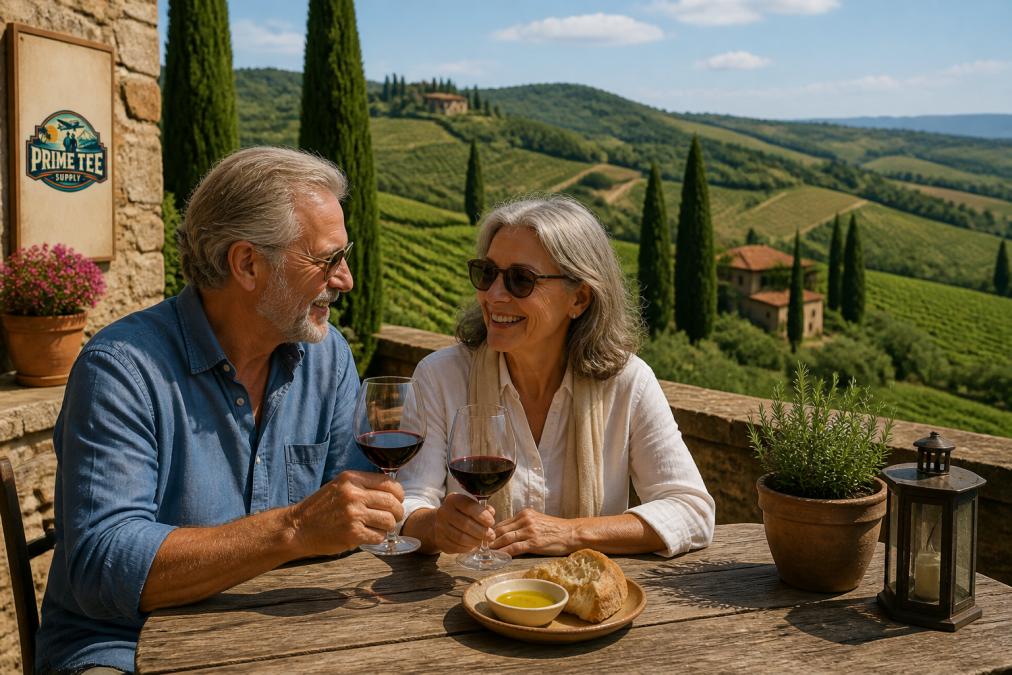
Tuscany is the region most travelers picture first, and it earns the reputation. Sangiovese, the grape behind Chianti Classico, Brunello di Montalcino, and Vino Nobile di Montepulciano, thrives in the warm, chalky hills between Florence and Siena. The terroir shifts noticeably every few miles, which is why two vineyards an hour apart can taste like different countries.
A Sample Tuscany Wine Tour Itinerary
Day 1: Land in Florence, settle in, and take an evening walk through the Oltrarno. Day 2: Train to Siena, explore the shell-shaped piazza, and taste Chianti Classico in town. Day 3: Rent a car or book a driver for the SR222 through Greve and Panzano. Day 4: Montalcino for Brunello, with a long lunch in the village. Day 5: Montepulciano for Vino Nobile, then a slow drive back through the Val d'Orcia.
Piedmont: Barolo, Barbaresco, and the Nebbiolo Heartland
Piedmont is where Nebbiolo reaches its highest expression, and where the food rivals the wine. Barolo and Barbaresco sit about 20 minutes apart in the Langhe hills south of Alba, and both produce wines with the pale color, high tannins, and rose-and-tar aromatics that define the grape. These are wines built for aging, and the cellars know it.

- Barolo: structured, tannic, needs time in the glass
- Barbaresco: softer, ready sooner, often better value
- Barbera and Dolcetto: the everyday reds locals actually drink
Veneto: Prosecco Hills and Valpolicella's Amarone
Veneto splits neatly into two wine identities, and both are easy to visit from Verona. The Prosecco Hills of Conegliano and Valdobbiadene, a UNESCO World Heritage landscape, produce the sparkling wine that outsells Champagne worldwide. Farther west, the Valpolicella valley makes Amarone, a rich red from dried grapes with the body and acidity to age for decades.
Sicily and Italy's Off-the-Beaten-Path Wine Regions
Sicily has become the most interesting wine island in the Mediterranean, and it rewards curiosity. Mount Etna's volcanic slopes produce Nerello Mascalese, a grape with the terroir-driven elegance of Burgundy and the smoky minerality of the volcano itself. Elsewhere on the island, Nero d'Avola and Grillo show what indigenous grapes can do when growers stop apologizing for them.
- Friuli-Venezia Giulia: white wines of real precision, near the Slovenian border
- Alto Adige: alpine whites and light reds in a German-speaking corner of the north
- Umbria: Sagrantino and Orvieto, an hour from Tuscany with a fraction of the traffic
The Best Time of Year to Visit Italian Vineyards
| Region | Harvest Window | Sweet Spot for Visitors | What to Expect |
|---|---|---|---|
| Sicily | Late August to late September | Late September | Warm days, Etna's higher slopes cooler than the coast |
| Tuscany | Mid-September to mid-October | First two weeks of October | Cellar activity, thinning crowds, unpredictable rain |
| Piedmont | Late September to late October | Mid-October | Truffle season overlapping harvest, cool mornings |
| Veneto | September to early October | Late September | Prosecco hills busy with pickers, Verona still walkable |
One more pattern seasoned travelers notice: the two weeks after harvest ends are often the best-kept secret. The frantic work is done, the winemaker has time to sit down, and the new wine is in tank. Ask when the estate finishes pressing, and plan around that.
Italian Wine Tasting Etiquette: What to Know Before You Go
Italian wine tasting etiquette is simpler than the rule lists suggest, but a few habits smooth the visit. Book ahead, arrive on time, and treat the tasting as a conversation rather than a transaction. Spitting is entirely acceptable and expected at serious tastings. Dress a notch above beachwear, since many estates sit beside private homes.

A few practical points:
- Tasting fees are common and often waived if you buy a bottle
- Children and non-drinkers are welcome at many estates, though policies vary, so ask when booking
- Designated drivers are essential; rural roads are narrow and enforcement is real
- Cash helps at small producers who do not take cards
- Language: English works at most estates, but a few phrases in Italian open doors
Accessibility and Limited Mobility
This is the part most guides skip, and it matters. Historic Italian cellars are frequently centuries old, which means uneven stone floors, narrow doorways, and staircases down to the barrel room. That is charming until it is not. If you or a companion have limited mobility, the practical move is to ask three specific questions when you book: Is the tasting room on the ground floor?
Traveling with Family or Non-Drinkers
Many estates welcome children, but the welcome varies. A working vineyard is a working farm, with tractors, open tanks, and uneven ground. The estates that handle families best usually offer a garden, a farm animal or two, and a simple snack, ask whether a non-tasting companion can join for a reduced fee or no fee at all. In Tuscany and Umbria, several estates run cooking demonstrations or olive oil tastings alongside the wine, which gives non-drinkers something to do besides watch.
Getting Around Without a Car
You do not need to drive to taste well. Alba, Siena, Verona, and Catania all have rail connections, and many wine towns are reachable by regional train. From a rail hub, a hired driver for a single day is often the most efficient way to reach the hill villages, and it means everyone in the party can taste. Local wine consorzia, the regional wine boards, frequently publish maps and recommended routes, and tourist offices in Alba, Siena, and Verona can help arrange a driver on short notice.
Frequently Asked Questions
Where is the best place for wine tasting in Italy for a first visit?
Tuscany remains the most rewarding starting point for most first-time visitors. The Chianti Classico zone between Florence and Siena puts you within a short drive of dozens of estates, and the hill towns of Greve, Radda, and Castellina give you somewhere lovely to stop between tastings. Piedmont rewards a second trip, and Veneto suits anyone who wants Prosecco and Amarone within an easy train ride of Venice. Base yourself in one region rather than racing between three.
Should I visit Sicily or Tuscany for wine tasting?
They scratch different itches. Tuscany delivers the postcard landscape, the famous Sangiovese wines, and the easiest logistics for a short trip. Sicily offers volcanic soils around Mount Etna, distinctive indigenous grapes such as Nero d'Avola and Nerello Mascalese, and far fewer tour buses. If you have ten days or more and want something less traveled, Sicily rewards the extra effort. For a five-day trip built around cellar visits, Tuscany is the simpler choice.
What is the best time of year to visit Italian vineyards?
Late September through mid-October is the sweet spot. Harvest season, known as vendemmia, brings activity to the cellars and often coincides with local grape festivals in wine towns. May and June run a close second, with mild weather, green vines, and thinner crowds. August is hot and many small producers close for the holidays. Winter visits are quiet but many estate tasting rooms operate on reduced hours, so check ahead before you build a route.
Are reservations required for wine tastings in Italy?
For small family estates, yes. Many work by appointment only, and a quick email or phone call a week ahead is usually enough. Larger estates with dedicated tasting rooms often accept walk-ins, but during harvest season and on weekends they fill up. Booking ahead also means you are more likely to get a tour of the cellar and a walk through the vines rather than a quick pour at the counter.
What should I know about Italian wine tasting etiquette?
Keep it simple and appreciative. Taste the wine before adding anything, comment on what you notice, and ask questions about the vineyard rather than announcing what you already know. Spitting into the provided bucket is entirely normal and lets you taste more without losing your edge for the drive. Dress neatly for a cellar visit, since cool underground rooms and gravel courtyards are common, and a comfortable graphic tee such as the Vino Views T-Shirt ($29.99) fits the casual, wine-loving mood without looking out of place.
Planning a wine trip involves a hundred small decisions, from which region fits your palate to how you will get between hill towns without a car. Prime Tee Supply makes the wardrobe part easy with soft, breathable graphic tees built for long days in the car and slow afternoons on a terrace. Browse the Italian collection, choose the design that matches your trip, and let the wine do the rest.